
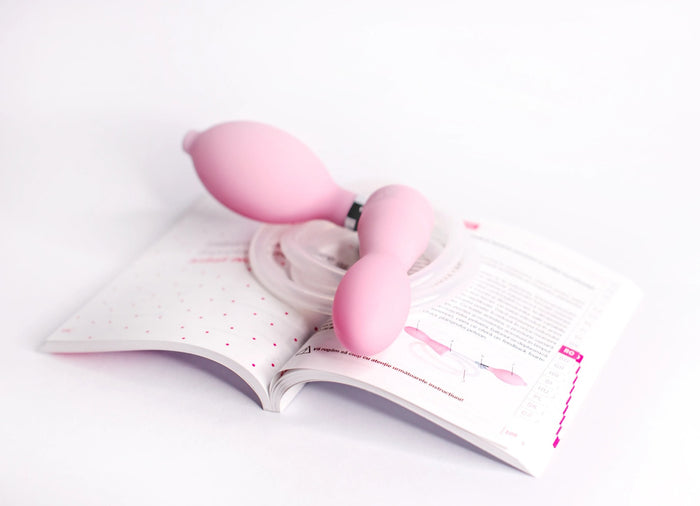



Alonea PelvicTool
or 4 interest-free payments of $387.50 with 
Alonea PelvicTool Home & Sport
Pelvic floor training device with app to strengthen and improve control of the pelvic floor muscles
The PelvicTool Home & Sport is an app-supported device for pelvic floor training, designed to improve awareness and coordination, and strengthen the pelvic floor muscles.
Training with the PelvicTool is straightforward and motivating: you sit on the comfortable seat cushion with the soft sensor tube and use the app to learn how to tighten and relax your pelvic floor muscles in a targeted manner.


Product details
Alonea PelvicTool Home & Sport
Pelvic floor training device with app to strengthen and improve control of the pelvic floor muscles
The PelvicTool Home & Sport is an app-supported device for pelvic floor training, designed to improve awareness and coordination, and strengthen the pelvic floor muscles.
Training with the PelvicTool is straightforward and motivating: you sit on the comfortable seat cushion with the soft sensor tube and use the app to learn how to tighten and relax your pelvic floor muscles in a targeted manner.
There is no need to insert a probe – training is completely non-invasive and can be done while fully clothed. The biofeedback method enables the sensors to record your muscle movements and display them in real time on your mobile phone or tablet. This allows you to monitor your progress at all times. The PelvicTool Home & Sport app, which offers a variety of training programmes, can be downloaded free of charge from the App Store or Google Play. All you need for training is a seat or stool and your smartphone or tablet (not included).
Prevent incontinence
Small effort, big impact: Just five minutes of training three times a week can strengthen your pelvic floor muscles and help you to prevent incontinence problems. The key is to train regularly.
Pelvic floor training is recommended both for preventing and treating functional disorders. These include problems such as urinary and faecal incontinence, erectile dysfunction and pelvic instability. Well-trained pelvic floor muscles can enhance athletic performance and contribute to a more fulfilling intimate experience. Strengthening the pelvic floor can also help with back pain.
Product features
- Pelvic floor trainer with biofeedback for targeted training
- Seated training – simple and easy to integrate into daily life
- Intimate-free training without insertion
- Suitable for women and men
- Can be used to support therapy and home training
- Enhances awareness, control and strengthening of the muscles
- Motivating training programs in the app
- Real-time progress tracking
- Swiss quality
- 2-year warranty
Cost sharing health insurance: Prevention and active health promotion is supported by health insurance in many cases. For questions regarding the assumption or participation of costs, please contact your health insurance company directly.
Effective, Non-Invasive and Swiss made
A strong pelvic floor means greater stability, more energy, enhanced well-being and freedom of movement, and improved sexual performance.
Pelvic Floor Training at Home and In Therapy
Simple, smart and discreet, with the Alonea PelvicTool Home and Sport, you can train your pelvic floor easily and effortlessly at home
Contents of the PelvicTool Home and Sport package:
- Ergonomic seat for holding the sensortube
- Comfortably soft sensortube
- USB power adapter
- USB cable
- PelvicTool app (download from the App Store / Google Play)
- User manual
- Storage bag
Alonea FAQs
Can pelvic floor training help with incontinence?
Yes, a weak pelvic floor is often responsible for urinary incontinence, especially when laughing, coughing or sneezing. Targeted, regular training of the pelvic floor muscles is considered the most important therapy for incontinence.
How can I maintain the success of my pelvic floor therapy in the long term?
To maintain the progress achieved in therapy, it is important to train the pelvic floor muscles regularly and minimise strain on the pelvic floor in everyday life.
How often should I do pelvic floor training?
It is recommended to set aside regular time for pelvic floor training in order to achieve noticeable progress.
How quickly can I expect to see results from pelvic floor training?
Initial positive effects, such as improved bladder control or enhanced potency, can be noticeable after just a few weeks of regular training. Long-term success, however, requires continuous pelvic floor training.
Why does the PelvicTool show movements during the stability exercise that are caused by breathing or weight shifts – and how should I deal with this? And why does the training still work effectively?
The PelvicTool by Alonea uses a highly sensitive biofeedback sensor that not only registers pelvic floor contractions but also other movements of the body – e.g. breathing, changes in posture, or pressure caused by weight shifts. This becomes particularly visible in exercises such as the “Stability Exercise” (= exercise with the scale symbol, see PelvicTool app), since the sensor includes every change in sitting position or upper body movement. This is due to the fact that the pelvic floor is functionally connected to many other muscle groups and nerve pathways. A completely isolated activation of the pelvic floor muscles is hardly possible – even small movements of the upper body, legs, or breathing influence the measurement.

